No products in the cart.

← Back to Blog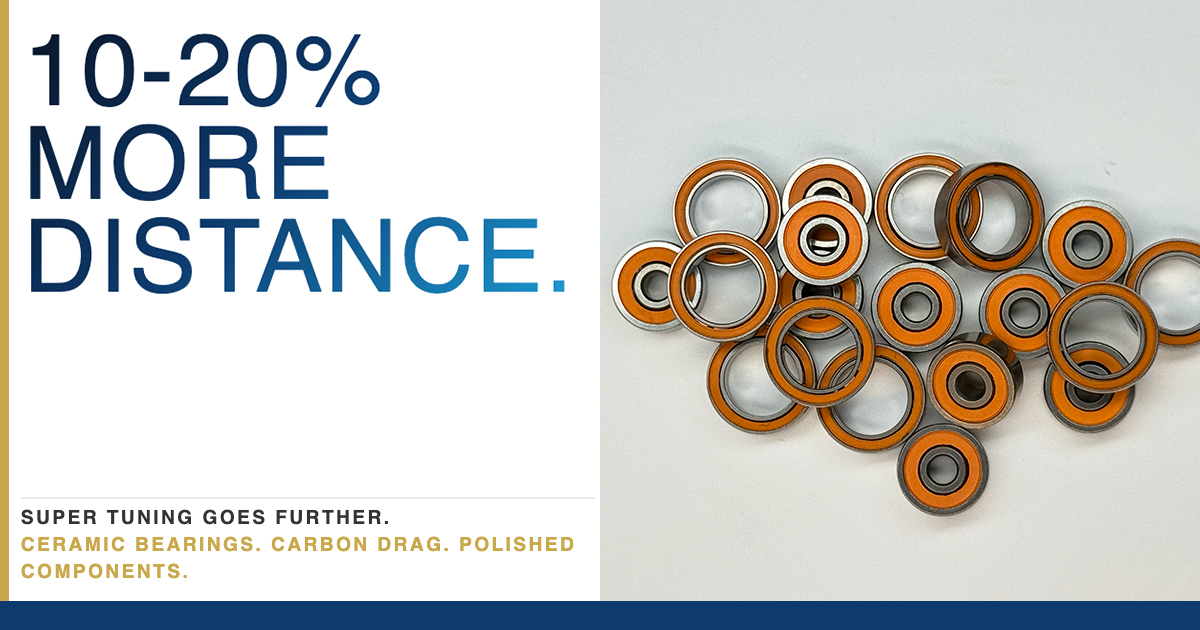
Super Tuning a Fishing Reel: What It Is, What Changes, and Whether Your Reel Qualifies
If you've ever looked at the Fischer Angling services page and wondered what "super tuning" actually means — and whether it's something you need or just an upsell — this post is for you. Super tuning sits above standard fishing reel repair and service as a performance-focused process, not just a restore-to-factory-spec job. It's the most common question I get after someone has already sent in a reel for a standard service. They feel the difference when they get it back, and they want to know why a super-tuned reel would feel different from that.
The short answer: it isn't magic. It's a specific set of additional processes that go beyond what a standard clean-and-lube covers. Some of them are measurable. Some of them you feel immediately on the first cast. And some of them matter more for certain reels and certain fishing situations than others.
This post breaks down exactly what super tuning involves, what changes in a reel's performance after the process, and how to know whether your specific reel is a good candidate for it.
What a Standard Reel Service Covers
To understand what super tuning adds, it helps to understand what standard professional fishing reel repair and service already includes. A full service means complete disassembly — every component removed from the reel body. Every bearing cleaned in an ultrasonic bath or solvent solution and re-lubricated with professional-grade oil. Every gear surface cleaned and re-greased. The drag system disassembled, the washers cleaned, the stack re-lubricated correctly. All moving components inspected for wear. Reassembly with the right lubricants in the right places, and a functional test before the reel ships back.
That process restores a reel to manufacturer specification. A reel that was grinding, stiff, or dragging incorrectly before service should come back smooth, clean, and correctly calibrated. If you've never had a reel professionally serviced or have been putting it off for years, a standard service alone will be a significant improvement.
Super tuning starts where a standard service ends.
What Super Tuning Adds
Super tuning is a performance optimization process layered on top of a complete service. Every reel that comes in for super tuning gets the full standard fishing reel repair and service first — cleaning, bearing refresh, re-lubrication, inspection. Then the additional work begins.
Bearing Upgrade: ABEC-7 Ceramic Hybrid
Not all bearings inside a fishing reel perform equally, and not all positions in the reel demand the same thing from a bearing. The spool bearing in a baitcaster — the one that freewheels during a cast — operates under entirely different conditions than the main shaft bearings that drive the retrieve. During super tuning, the standard stainless steel bearings used by the manufacturer are replaced with ABEC-7 ceramic hybrid bearings. This is the most impactful individual upgrade in fishing reel repair and performance work — targeted, measurable, and immediately felt on the water.
To understand why this matters, it helps to know what those specs actually mean. ABEC is the Annular Bearing Engineers' Committee rating scale — it measures the dimensional tolerances and geometric precision a bearing is manufactured to. The scale runs 1, 3, 5, 7, and 9. Most stock fishing reel bearings are ABEC-3 or ABEC-5. ABEC-7 means tighter tolerances on the inner and outer ring dimensions, less runout, and a more consistent surface finish — all of which translates to a bearing that spins more smoothly and predictably under load.
"Ceramic hybrid" refers to the ball material. A hybrid bearing uses ceramic balls — typically silicon nitride — inside steel inner and outer races. Ceramic balls are approximately 40% lighter than steel balls of the same size, significantly harder, and manufactured to a smoother surface finish. They also don't corrode, which is a meaningful advantage in saltwater environments. Because of their lower mass and reduced friction coefficient, ceramic balls generate less heat during rotation and require less lubrication to perform correctly. Multiple independent studies on bearing performance in high-speed applications have confirmed that ceramic hybrid bearings reduce friction by 20–40% compared to all-steel bearings of equivalent size — and in a fishing reel application, that reduction shows up directly as faster spool acceleration during a cast, less resistance at the beginning of the cast, and a longer, more controlled lure flight.
Depending on the reel model, there are sometimes two spool bearings and sometimes three that need to be replaced as part of the upgrade — some designs use a bearing on each end of the spool shaft, while others incorporate an additional bearing in the level-wind or pinion assembly. We evaluate each reel individually and replace all the spool-system bearings that benefit from the upgrade. An upgraded spool bearing is one of the clearest performance differences between a reel that casts well and one that casts the same lure noticeably further.
Drag System Optimization
The drag system in most fishing reels works well out of the box and continues working reasonably well through normal service cycles. Super tuning takes the drag beyond "works well" and optimizes it for smooth, linear engagement across the full range of the drag adjustment.
This involves evaluating the drag washer stack — the material, the condition, and the compression — and replacing components where needed. Carbon fiber drag washers are one of the upgrades that makes a meaningful difference here. Carbon fiber maintains consistent performance across a wider temperature range than felt washers, doesn't absorb lubricant the same way, and provides a smoother, more linear response under load. The result is a drag that engages and releases more predictably — which matters significantly when you're fighting a fish on light line or dealing with sudden direction changes.
It's worth noting that many newer or higher-cost reels already come with carbon fiber drag washers from the factory. We take this into account when determining pricing for super tuning a particular reel — if the factory washers are in good condition, we're not replacing what doesn't need replacing.
The drag is re-lubricated with the correct product in the correct amount. Too much lubricant causes slip. Too little causes stick-slip engagement. This calibration step is where a lot of DIY drag maintenance goes wrong — it looks simple but the specifics matter.
Polishing Components
Super tuning at many shops stops at bearing and drag washer upgrades. At Fischer Angling we go further, because there's no point installing premium components on surfaces that aren't ready for them. This extra step is one of the key things that separates a proper super tune from basic fishing reel repair work.
Before the drag stack goes back in, we sand and polish the main gear to ensure the drag washers are seating on a clean, even surface. Most reels that come through the shop — even ones that look fine externally — have residue and micro-pitting on the main gear caused by contaminants working through the reel over time. A drag washer sitting on a pitted or uneven surface can't perform the way it's designed to, regardless of the quality of the washer itself. Polishing the gear gives the entire drag stack a clean base to work from.
We also sand and polish the spool ends — the surfaces that contact the tensioner and side plates. This is a straightforward step but an important one. Any roughness or residue on those contact points introduces inconsistency in how the spool seats and spins. Starting with clean, polished surfaces means the bearing upgrade and the spool tension adjustment are working from the best possible baseline.
Lubrication Specification
Super tuning uses Ardent Reel Butter Bearing Lube and Ardent Reel Butter Oil — professional-grade lubricants formulated specifically for fishing reel applications. Every bearing gets the bearing-specific formulation. Every gear surface gets the gear-specific formulation. The right product in the right location in the right amount isn't a trivial detail — it's the difference between a reel that stays tuned through a full season and one that needs fishing reel repair attention again in six weeks.
What You Feel After Super Tuning
The most immediate thing most anglers notice is casting distance. On a baitcaster with a fresh, upgraded spool bearing and optimized spool tension settings, the same lure on the same rod will cast measurably further. This is especially true if the reel was previously running with a worn or corroded spool bearing — the improvement can be dramatic. Tournament bass anglers who run precise casting setups can feel a 10–20% distance gain on a well-executed super tune.
The second thing people notice is retrieve smoothness. A properly lubricated gear set with polished contact surfaces has a different feel under the handle than a reel that's simply been cleaned. There's less texture, less variation in resistance through the rotation, and a more consistent feel whether you're winding against a light presentation or cranking down a deep runner. Anglers who fish a lot of finesse techniques — drop shots, shaky heads, ned rigs — appreciate this more than almost anyone because they're feeling the line through the reel constantly.
Drag performance is the third thing. A super-tuned drag with carbon fiber washers, polished seating surfaces, and correct lubrication engages at the set point without hesitation and releases pressure smoothly without a sudden drop. If you've ever had a fish run and felt the drag grab before it releases — that stutter at the beginning of a run — that's a drag that needs work. A properly tuned drag is invisible. You set it and trust it.
Which Reels Are the Best Candidates
Not every reel makes sense for super tuning, and not every situation calls for it over standard fishing reel repair. Here's how to think about it.
High-quality baitcasters are the best candidates for super tuning, and they show the most obvious performance gains. Reels in the $150-and-up range — your Shimano Curado series, Daiwa Tatula, Abu Garcia Revo, Lew's Custom Pro — were designed with tolerances tight enough that upgrading the bearing quality makes a measurable difference. These reels are also worth the investment in performance work because they're used hard and they're worth protecting.
If you're a tournament angler or a serious high-use angler who fishes 50+ days a year, super tuning your primary casting reel before the season is one of the highest-return investments you can make in your fishing setup. The reel you rely on the most deserves the most attention. Baitcasters that have been running rough or showing signs of wear are also strong candidates — combining a super tune with fishing reel repair work at the same time is efficient and economical.
Spinning reels benefit from super tuning as well, particularly higher-end spinning setups used in finesse freshwater fishing or lighter saltwater applications. The drag optimization and bearing work applies directly — and for anglers fishing light line where the drag must engage perfectly, the improvement can be significant. Spinning reels that have developed roughness in the retrieve or inconsistency in the drag are strong candidates regardless of price point.
Budget reels — entry-level setups under $75–80 — are generally not great super tuning candidates. The cost of the service relative to the cost of the reel rarely makes economic sense, and the components don't have the precision tolerances that performance optimization improves. A standard service is the right choice for most entry-level reels.
Super Tuning vs. Standard Service — The Decision
The easiest way to decide: is this a reel you'd be disappointed to fish without, or just a reel you fish with?
If you have a reel you reach for first — the one rigged with your confidence bait, the one you'd be upset to break or lose — that reel is a super tuning candidate. It's the reel you're asking the most from, and it deserves the most attention.
If you're fishing a setup that you swap around depending on conditions and aren't particularly attached to the performance of that specific reel, a standard service is the right choice. Clean bearings, fresh grease, correct drag lubrication — that's what it needs, and that's what a standard service delivers.
If you're sending a reel in for fishing reel repair due to a specific performance problem, super tuning can be combined with that repair work. If the reel is getting fully disassembled anyway for a diagnosis or part replacement, adding the super tuning process at that point is efficient — the labor overlap is significant and the total cost is less than scheduling it as a separate service later.
How to Send a Reel In
The process for a super tune is the same as any other fishing reel repair or service order. You can book directly through the super tuning service page, package your reel securely, and ship it in. If you've never sent a reel through the mail before, our mail-in reel service guide includes the choice for you to ship the reel to us. We will email you a shipping label; all you need to do is put the reel in a box, print the shipping label and attach to the box then drop it off with the USPS. We'll go through the full process, communicate if we find anything unexpected, and ship the reel back with documentation of what was done.
If you're local to the Galveston area, drop-off is also available. Reach out to confirm timing before dropping off.
Use WELCOME15 for 15% off your first order — the code applies to super tuning and all other services at checkout.
If you're not sure whether your reel needs a standard service, a super tune, or something else entirely, this breakdown of baitcaster warning signs is a good starting point. The most common mistake anglers make is waiting until the reel is obviously failing before sending it in — and by that point, what would have been a straightforward fishing reel repair has often turned into a much larger job. If you're asking the question, it probably needs attention.
SPRING15 DEAL
LIMITED TIME OFFER
SPRING REEL SERVICE DEAL
15% OFF
ALL REEL SERVICES
USE CODE AT CHECKOUT
SPRING15
Expires April 30, 2026
- ✔ Baitcasters & spinning reels
- ✔ Gulf Coast saltwater specialists
- ✔ 10-day turnaround
- ✔ Mail-in or local drop-off
15+ years · 1,500+ reels serviced
