No products in the cart.

← Back to Blog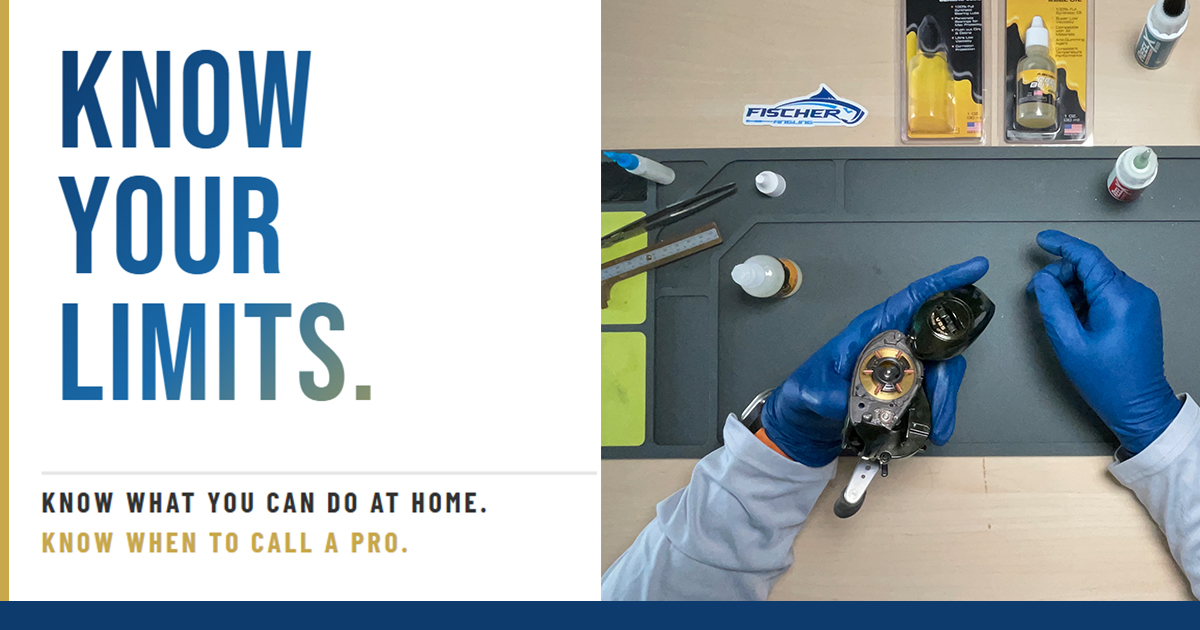
DIY Reel Service: What You Can (and Can't) Do at Home
"How often should I clean my reel myself, and when do I actually need professional service?"
I get this question at least once a week at my Galveston shop. And I love it—because it tells me the angler cares about their equipment and wants to take good care of it.
Here's my honest answer: There's a lot you can and should do yourself to maintain your fishing reels between professional services. Good DIY reel service habits will extend the life of your reels, improve performance, and reduce how often you need to send them in for professional fishing reel service.
But there's also a clear line between what you should tackle at home and what requires professional tools, knowledge, and experience. Cross that line, and you risk turning a simple maintenance task into an expensive repair job.
I've been servicing fishing reels professionally for 15 years here in the Houston and Galveston area. I've seen hundreds of reels come into my shop after well-intentioned DIY maintenance went wrong. I've also worked with anglers who do excellent home maintenance and only bring their reels in once or twice a year for deeper service.
In this guide, I'll show you exactly what you can safely do yourself, what you should avoid, and how to know when it's time for professional fishing reel service.
Why DIY Reel Service Matters
Let's start with why you should care about maintaining your reels between professional services.
Every fishing trip deposits salt, dirt, sand, and debris on your reel. If you fish the Gulf Coast like most of my customers do, you're dealing with saltwater spray, beach sand, and boat grime with every trip. This can also happen to freshwater anglers because of the dirt and nasty deposits some of our lakes unfortunately have in them.
Leave that contamination on your reel, and it starts causing problems immediately:
Salt attracts moisture from the air. That moisture mixes with the salt to create a corrosive solution that eats away at metal components. As I explained in my recent post about how coastal humidity destroys reels, this process happens fast in our Gulf Coast climate—sometimes within hours of exposure.
Sand and grit work their way into bearings and other moving parts. This creates friction and wear, grinding away at precision surfaces every time you turn the handle.
Old grease and oil collect dirt and debris, turning protective lubrication into grinding paste that accelerates wear instead of preventing it. Add some sand to that mixture and you have a great sandpaper solution that works really well on grinding down bearing races.
The good news? Basic cleaning after every saltwater trip can prevent most of this damage. The even better news? It only takes 5-10 minutes if you know what you're doing.
What You CAN Do at Home: The After-Trip Cleaning Routine
Here's my recommended routine after every saltwater fishing trip. This is what I do to my own reels, and it's what I teach to customers who want to maintain their equipment properly between services.
Step 1: The Gentle Rinse (Critical for Saltwater Anglers)
As soon as possible after fishing, rinse your reels with fresh water. But here's the key: gentle rinse or mist, not aggressive spray.
Use low-pressure fresh water—either a gentle mist from a hose with your thumb partially covering the end, or a bucket of fresh water with a soft cloth.
Focus on the exterior surfaces: the frame, side plates, handle, and especially around the drag star or drag adjustment knob. You want to remove salt and debris without forcing water into the reel's internals.
What NOT to do: Never use a high-pressure hose, pressure washer, or direct spray from a faucet. High-pressure water will force salt water past seals and into bearings, which is worse than not rinsing at all.
Never submerge your reel or run it under water. Many people think this is the proper way to clean a reel but submerging a reel can destroy it quickly.
After rinsing, wipe your reel dry with a soft, lint-free cloth. Pay special attention to any areas where water can pool—around the spool, in the levelwind channel on baitcasters, and around the bail arm on spinning reels. I leave the reel on the rod and just gently bounce the rod end on the ground to make sure the water is all coming off.
Step 2: External Inspection and Cleaning
Once your reel is dry, do a quick inspection:
Look for any obvious damage, loose screws, or parts that don't seem right. Check the handle for any play or wobble. Test the drag to make sure it's still engaging smoothly.
If you see salt deposits or dried residue, use a slightly damp cloth to wipe them away. For stubborn salt buildup, you can use a cotton swab dampened with fresh water to get into small crevices.
Check your line guides—the levelwind on baitcasters or the roller on spinning reels. These take direct contact with your line thousands of times per trip. Wipe them clean and check for any rough spots or damage.
Step 3: Light Lubrication of External Moving Parts
After cleaning and drying, it's time for light lubrication—but only on external, easily accessible moving parts.
Here's what you can safely lubricate at home:
Handle knob bearing: Put a single drop of light reel oil on the handle knob shaft where it meets the handle arm. Turn the knob a few times to work the oil in.
Handle nut: If your handle has an external nut, put a drop of oil on the threads. This prevents corrosion and makes future maintenance easier.
Bail arm spring (spinning reels): Put a tiny drop of oil where the bail arm pivots. This keeps the bail snapping closed smoothly.
External pivot points: Any external screws or pivot points that move can get a drop of light oil.
What NOT to do: Do not remove side plates or covers to access internal components. Do not oil or grease anything you can't reach without disassembling the reel. Do not use heavy grease or automotive oil—these attract dirt and damage precision components.
Step 4: Drag System Check
Set your drag to about 25% of your line's rated strength and pull some line off. The drag should release smoothly and consistently without any stuttering or sticking.
If your drag feels inconsistent, don't try to fix it yourself by disassembling the drag stack. This is one of those areas where DIY maintenance often causes more problems than it solves. Instead, note the issue and plan to have it addressed during your next professional reel service.
The only drag adjustment you should make at home is the external drag setting itself—tightening or loosening the drag star or knob. Never disassemble the internal drag stack components.
Step 5: Storage Preparation
If you're storing your reel for more than a few days between trips, take these steps:
Back off your drag completely. Storing reels with the drag tight can cause the drag washers to develop flat spots and lose their effectiveness.
If possible, store your reels in a climate-controlled environment. Avoid garages, sheds, or boats where temperature and humidity fluctuate wildly.
Consider using a reel case or cover to protect your reels from dust and debris during storage.
That's it. Five simple steps, 5-10 minutes of work, and you've done more to protect your reels than 90% of anglers out there.
What You CANNOT Do at Home: Where DIY Maintenance Ends
Now let's talk about what you shouldn't attempt at home, even if you think you know what you're doing.
Internal Component Disassembly
Unless you have professional training, specialized tools, and genuine replacement parts, don't open up your reels.
Here's why: Modern fishing reels are precision instruments with dozens of small parts, springs, and components that need to be assembled in a specific order, some with specific tolerances. Remove the wrong screw, lose a tiny washer, or reassemble something incorrectly, and you can turn a working reel into a paperweight.
I see this all the time. An angler watches a YouTube video or reads a forum post and thinks, "I can do that." They open up their reel, everything looks different from the video, parts go flying, and suddenly they're missing critical components or can't figure out how to put it back together.
I'll admit it, I have at times reinstalled components incorrectly only to realize that after everything is tightened down something doesn't feel right. Then it's back to tearing the reel back apart and figuring out if it's my error or something worn or broken. Normally I can tell very quickly what the issue is, for a DIY individual it might be a different story.
Even if you successfully disassemble and reassemble your reel, there's a good chance you'll cause problems: You might overtighten screws, stripping threads or cracking the frame. You might undertighten them, causing parts to come loose during use. You might contaminate components with dust or debris. You might use the wrong lubricants in the wrong places.
The cost of professional fishing reel service—$28 for a baitcaster or $27 for a spinning reel—is far less than the cost of replacing parts or buying a new reel after a DIY disaster.
Bearing Cleaning and Replacement
Bearing maintenance is one of the most common DIY projects that goes wrong.
Reels have multiple bearings, each serving a specific purpose and requiring specific lubrication. The spool bearings need very light oil for maximum speed. The main gear bearings need slightly heavier oil for durability. Handle bearings need medium-weight oil for smooth rotation.
Use the wrong oil in the wrong bearing, and you'll hurt performance. Too much oil in spool bearings and your casting distance drops dramatically. Too little oil in main gear bearings and you'll accelerate wear.
There are also clips and particular plates that keep these bearings in place. If anyone has replaced bearings on a baitcast reel they know there's a particular fastener that likes to fly about 30 feet in any direction if not removed properly. Have fun finding this on carpet!
As I detailed in my post covering the signs your baitcaster needs service, bearing problems show specific symptoms. If you're experiencing those symptoms, it's time for professional service—not a DIY bearing swap.
Drag System Service
The drag system is the heart of your reel. It's also one of the most commonly damaged components during DIY maintenance.
Here's what goes wrong: Anglers disassemble the drag stack and lose track of the order of components. Drag stacks have a specific arrangement of washers, plates, and springs. Get the order wrong and the drag won't work properly.
They use the wrong grease. Drag grease is a specific formulation designed to provide smooth, consistent resistance under pressure. Automotive grease, WD-40, or household lubricants will cause the drag to stick, chatter, or fail completely.
They overtighten the drag star or knob during reassembly, deforming the drag washers. They get dirt or debris in the drag stack during the process.
Drag system service is something I handle carefully during every professional reel service. It requires the right tools, the right lubricants, and the knowledge to identify worn components that need replacement. This isn't a DIY job.
Gear Alignment and Timing
If you're experiencing gear problems—grinding, clicking, or handle resistance—don't attempt to fix it yourself. Gear alignment requires specialized tools and the experience to know when gears are worn versus simply misaligned. This is professional territory.
Clutch Adjustment and Repair (Baitcasters)
The clutch system that allows your baitcaster spool to free-spool for casting is a precision mechanism. If you're having clutch problems—delayed engagement, soft engagement, or inability to free-spool—this requires professional attention.
Clutch repair often involves replacing worn components, adjusting spring tension, and ensuring precise alignment. These aren't tasks for DIY maintenance. Improper reel grease is one main item I see that cause this problem.
The Right Tools and Products for DIY Maintenance
If you're going to do home maintenance, use the right tools and products:
Recommended Tools:
- Soft, lint-free microfiber cloths
- Cotton swabs for getting into crevices
- Small, soft-bristle brush (like an old toothbrush) for stubborn dirt
What NOT to Use:
- WD-40 or 3-in-1 oil (too light, evaporates quickly, attracts dirt)
- Automotive grease or oil (too heavy, wrong viscosity)
- Silicone sprays (attract and hold dirt)
- Abrasive cleaners or brushes (scratch surfaces)
- High-pressure water (forces water into internals)
- Solvents or harsh chemicals (damage seals and plastics)
The cost of proper reel oil is minimal—usually $8-12 for a bottle that will last you several years. It's worth using the right products to protect your investment.
How Often Should You Do DIY Maintenance vs. Professional Service?
Here's the maintenance schedule I recommend for Gulf Coast area anglers:
After Every Saltwater Trip:
- Gentle fresh water rinse
- Dry thoroughly
- Quick inspection
- Light external lubrication (every 3-5 trips)
Monthly (for regular saltwater anglers):
- More thorough cleaning
- Detailed inspection
- Line inspection and possible replacement
Professional Service Schedule:
- Heavy users (3+ trips/month in saltwater): Every 3-4 months
- Regular users (1-2 trips/month): Every 6 months
- Occasional users: Annually, preferably before spring season
Regular DIY reel service between professional visits will keep your reels in good shape and extend their lifespan. But it doesn't replace the deep cleaning, lubrication, and inspection that happens during professional reel servicing.
Think of it like car maintenance: You can and should check your oil, tire pressure, and fluid levels yourself. But you still need to take your car to a mechanic for oil changes, tune-ups, and repairs. Your fishing reels are the same way.
When DIY Maintenance Isn't Enough: Recognizing the Signs
No amount of DIY cleaning can fix certain problems. Here's when you need to stop cleaning and schedule professional service:
Grinding or rough feeling when turning the handle, even after external cleaning. This indicates internal bearing problems that require disassembly and service.
Inconsistent or sticky drag performance. This usually means drag washers need service or replacement, which requires complete drag stack disassembly.
Excessive handle play or wobble. This could indicate worn bearings or loose internal components.
Casting distance has noticeably decreased. This often means spool bearings need professional cleaning or replacement.
Clicking, popping, or grinding noises during use. These sounds indicate gear problems or bearing issues.
Clutch problems on baitcasters—hard/soft engagement, or failure to free-spool.
Visible corrosion on internal components (seen without disassembly). If you can see corrosion from the outside, there's likely much more inside.
Any of these symptoms mean it's time for professional attention. As I explain in my guide to our reel service process, we systematically disassemble, clean, inspect, and lubricate every component. We replace worn parts, identify developing problems, and ensure your reel is operating at peak performance.
The Real Cost of DIY Gone Wrong
Let me share a cautionary tale:
Last summer, an angler brought me a high-end baitcasting reel that had cost him $350 new. He'd watched some YouTube videos and decided to do a "complete service" himself.
He managed to get the reel apart, but he lost several small springs and washers in the process. He cleaned the bearings with WD-40 (which is way too light and evaporates quickly). He reassembled the drag stack in the wrong order. And he stripped two screw threads by overtightening during reassembly.
By the time he brought it to me, the reel was in worse shape than before he started. I had to source replacement parts, grind out the stripped screws, and rebuild the drag system. The total cost? $125 in labor and parts.
If he'd just brought it to me for a standard baitcaster reel service in the first place, it would have cost $28.
I'm not sharing this story to scare you away from basic DIY maintenance. The after-trip cleaning routine I outlined above is safe, effective, and something every angler should do.
But know your limits. Stick to external cleaning and light lubrication. Leave the internal work to professionals who have the tools, parts, and experience to do it right.
Finding the Balance: DIY Maintenance Plus Professional Service
The best approach combines regular DIY reel service with periodic professional service.
After every trip: Do the 5-step cleaning routine I outlined. This takes 10 minutes and prevents 90% of saltwater damage.
Between trips: Store your reels properly, check them periodically, and address any issues you notice.
Every 3-12 months (depending on usage): Schedule professional fishing reel service for deep cleaning, inspection, and maintenance.
This balanced approach gives you maximum reel performance and lifespan, lower long-term costs, confidence in your equipment, and more time fishing instead of dealing with equipment problems.
Get Started with Proper Reel Maintenance Today
Don't let equipment problems cut your fishing trips short. Start implementing the DIY reel service routine I've outlined, and schedule professional service based on how often you fish.
If you have questions about what you can safely do yourself, or if your reel is showing any of the warning signs I mentioned, feel free to contact us. I'm always happy to help anglers understand their equipment and make informed decisions about maintenance and repair.
For reels that need professional service, you can visit our baitcasting reel service page or spinning reel service page to schedule service. We offer convenient mail-in service for anglers throughout Texas and beyond.
And if you want to take your reels to the next level, check out our Super Tuning service that includes ceramic bearing upgrades and carbon fiber drag washers for maximum performance.
Take care of your reels, and they'll take care of you on the water. The combination of regular DIY cleaning and periodic professional service will keep your equipment running smoothly for years to come.
SPRING15 DEAL
LIMITED TIME OFFER
SPRING REEL SERVICE DEAL
15% OFF
ALL REEL SERVICES
USE CODE AT CHECKOUT
SPRING15
Expires April 30, 2026
- ✔ Baitcasters & spinning reels
- ✔ Gulf Coast saltwater specialists
- ✔ 10-day turnaround
- ✔ Mail-in or local drop-off
15+ years · 1,500+ reels serviced
