No products in the cart.

← Back to Blog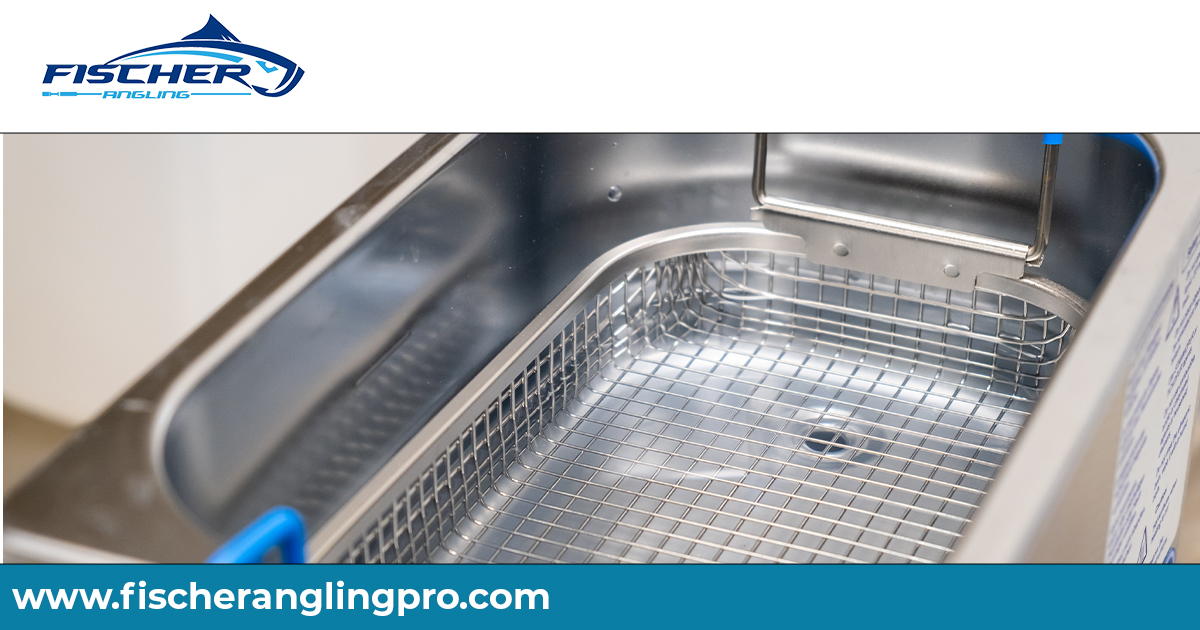
Inside Our Reel Service Process
Ever wondered what actually happens when you send your fishing reel off for service?
I get it. Handing over a $300 reel to ship halfway across the country can feel... nerve-wracking. You're trusting a stranger with equipment that's not just expensive—it's personal. That reel has caught your personal bests, survived rough trips, might have been your mother or father's reel and has become an extension of your fishing technique.
So when someone asks me, "What exactly are you going to do with my reel?" I don't tell them "we'll clean it and tune it up." That's not good enough. You deserve to know exactly what happens from the moment your reel arrives at our shop to the moment it ships back to you performing better than new.
This is that story. The complete, unfiltered look at our service process.
Why Transparency Matters
In 15 years of servicing reels, I've heard every concern:
- "What if they lose my reel?"
- "How do I know they're actually doing anything?"
- "What if it comes back worse than it went in?"
- "Are they just spraying some oil in there and calling it done?"
These are legitimate questions. The fishing reel service industry has plenty of horror stories — reels that come back in pieces, services that take months, shops that go dark after you've sent payment.
That's not how we operate.
At Fischer Angling, we've built our reputation on one thing: doing exactly what we say we're going to do, and doing it right. Our 98% customer satisfaction rate across 1,500+ serviced reels didn't happen by accident. It happened because we treat every reel like it's our own.
Let me show you how.
The 4-Step Journey: Your Perspective
Before we dive into the technical details, let's walk through what the process looks like from your end:
Step 1: Book Your Service
You visit www.fischeranglingpro.com - browse the sight a bit and select your service:
- Baitcast Reel Service Process - Complete teardown, ultrasonic cleaning, rebuild ($28-$50)
- Spinning Reel Service Process - Same meticulous process for spinning reels ($27.25-$50)
- Super Tuning - Performance upgrades (ceramic bearings, carbon fiber drag washers) - add-on to base service
You choose reel service, and the website walks you through the rest. No phone calls, no back-and-forth emails, no confusion.
Step 2: Ship Your Reel
Here's where we're different from most shops.
You don't have to figure out how to ship it.
When you check out, you'll see an option for a prepaid USPS shipping label. Click it, and within minutes after payment, you'll receive an email with a printable label. No guessing at addresses, no standing in line at the post office weighing boxes. We also add return shipping from our shop to your residence. We have your address from the shipping you've provided and we get an email with your return shipping.
All you have to do is just:
- Print the label
- Pack your reel securely (we'll include packing tips in the email)
- Stick the label on the box
- Drop it at any USPS location or hand it to your mail carrier
The label includes tracking, so you can watch your reel make its way to our Galveston, Texas shop. And yes, we get a notification the moment it's scanned at your local post office.
Prefer to ship it yourself? That's fine too. Our address is on your order confirmation. Ship it however you want—USPS, FedEx, UPS, even carrier pigeon if that's your thing.
Step 3: Expert Service (This Is Where the Magic Happens)
Your reel arrives at our shop in Galveston, Texas. From here, it's in our hands. We'll cover exactly what happens in the next section—but the short version is: complete teardown, ultrasonic cleaning, precision rebuild, and performance testing.
Timeline: Most services are completed within 2 weeks. We'll send you updates along the way, and you can always check your order status online.
Step 4: Return & Fish
When your reel is finished, we pack it carefully and ship it back to you with tracking. You'll get an email notification when it ships, complete with a tracking number so you know exactly when it'll arrive.
Then you open the box, feel how smooth it is, and get back on the water.
That's the customer-facing journey. Simple, transparent, no surprises.
But what actually happens during Step 3?
We're glad you asked.
Behind the Scenes: What Really Happens During Service
This is the part most shops don't want to show you. We're pulling back the curtain completely.
Inspection & Documentation
When your reel arrives, the first thing we do is inspect it thoroughly—before we touch anything.
We're looking at:
- Overall condition
- Visible damage or corrosion
- How it feels when we turn the handle
- Whether there are any modifications or aftermarket parts
- Signs of previous service (good or bad)
- After many years of doing this we are familiar with issues that arise for each reel.
We document all of this. If we spot anything concerning—stripped screws, any corrosion, missing parts—we'll contact you before we proceed. No surprises when you get the bill.
Real talk: About 40% of the reels that come through our shop have issues that can't been seen. Maybe there's saltwater damage that wasn't visible from the outside. Maybe a previous "service" was done by someone who had no idea what they were doing. We'll always tell you what we find and give you options.
Complete Teardown
This is where we earn our money.
A proper reel service means taking everything apart. Not "remove the side plate and spray some oil around." I'm talking:
- Side plates off
- Spool removed
- Drag stack disassembled (every washer, every disc)
- All bearings removed - even including the stubborn spool shaft bearing
- Gears extracted
- Handle and knobs disassembled
- Every screw, spring, clip, and pin accounted for
We lay everything out in organized trays. in each reel service process each reel gets its own workspace, and we never mix parts between reels. Your reel's parts stay your reel's parts.
Why go this far? Because the problems are usually hiding in the places you can't see. Saltwater creeps into bearings. Grease turns to sludge in the gears. Drag washers compress, are over greased and lose their grip. You can't fix what you can't access.
The Ultrasonic Cleaning Process
This is where we separate ourselves from hobbyists with a YouTube channel.
We use a 42kHz ultrasonic cavitation cleaning system. That's a fancy way of saying: we use sound waves to create microscopic bubbles that implode and blast away contamination at a molecular level.
Here's what that means in practice:
Your parts go into a heated bath of specialized cleaning solution. The ultrasonic waves create millions of tiny bubbles that get into every cranny, every groove, every microscopic crevice. When those bubbles collapse, they create pressure waves that scrub away salt, dirt, old grease, and corrosion without scratching or abrading the metal.
It's the same technology hospitals use to sterilize surgical instruments. And it's absurdly effective.
After about 30 minutes in the ultrasonic bath, we rinse everything in clean solvent and let dry. What comes out looks almost new—even if the reel is 10 years old.
Can you clean parts at home? Sure. With a toothbrush and some isopropyl alcohol, you can get 70% of the way there. But that last 30%—the salt crystals embedded in bearing races, the grease baked into gear teeth—that requires industrial-grade equipment.
Bearing Inspection & Replacement
Every single bearing gets individual attention.
We remove each bearing and soak them in an isopropyl alcohol solution. Then they're off to the ultrasonic cleaner for 30 minutes, dried and tested by hand. We're looking for:
- Smooth rotation (should spin freely for 5+ seconds)
- No grinding or clicking sounds
- No lateral play or wobble
- No rust or pitting on the races
If a bearing passes inspection: We clean it, dry it, and lubricate it with premium bearing oil (more on that in a minute).
If a bearing fails inspection: We contact you and get your ok to replace it.
Here's the thing about bearings: Quality stainless steel and/or ceramic bearings cost about $8-$20. But a failed bearing will destroy your cast distance, create noise, and eventually damage other components. So if there's a question about whether a bearing is good, we replace it.
It's always difficult to tell how many bearings or for how long will a bearing last. That all depends on how you maintain your reels. Replacing a bearing is pretty normal for reels that have seen regular use, especially in saltwater.
Want ceramic bearings instead? That's what our Super Tuning service is for. We replace specific bearings with ceramic hybrid bearings—they're smoother, have higher production standards, spin faster, are more corrosion-resistant, and they'll normally outlast a standard stainless bearing.
Gear Inspection & Lubrication
The gear train is the heart of your reel. If the gears are damaged, nothing else matters.
We inspect every tooth on every gear under magnification. We're looking for:
- Wear patterns
- Chipped or broken teeth
- Damaged plastic gears
- Signs of running dry (scoring, discoloration)
If the gears are good: We apply a thin coat of premium marine-grade grease. Not the cheap stuff you get at Walmart—we use synthetic lubricants designed for high-load, high-speed applications in saltwater environments.
If we find damage: We'll tell you. Gear replacement requires manufacturer parts, and depending on the reel, it might not be cost-effective to repair. We'll always give you honest advice about whether the repair makes sense.
In 15 years, I've seen less than 1% of reels come in with gear damage that required replacement. They don't fail often.
Drag System Rebuild
The drag system is the most misunderstood component on a reel.
Most people think drag maintenance means "spray some oil on the washers." That's the worst thing you can do.
Here's how we actually service a drag:
- Within the reel service process we disassemble the entire drag stack - every washer, every carbon fiber disc, in order
- Clean each component - with clean solvent (never oil)
- Inspect for wear - drag washers compress over time and lose grip
- Replace worn washers - if they're compressed, glazed, or damaged
- Apply proper drag grease - a thin, even coat on the metal washers. I apply a light coat of drag grease even when a reel has carbon fiber washers. I like that the grease will provide a smoother drag than leaving them dry. I use Shimano and Cal's drag grease.
- Reassemble in exact order - this matters more than you'd think
- Test under load - we actually put pressure on the drag and make sure it's smooth and consistent
A properly serviced drag should:
- Engage smoothly without stuttering
- Hold consistent pressure across the entire range
- Not slip under load
- Not make noise
For Super Tuning customers: We replace all your drag washers with premium carbon fiber washers. These provide smoother, more consistent drag pressure and handle higher temperatures without losing performance.
Reassembly & Precision Adjustment
Now we put it all back together.
This isn't a "screw it together and hope for the best" operation. Every component goes back in exactly the right place, in the right order, with the right amount of lubricant.
We're checking:
- Spool alignment - should be centered with no wobble
- Handle play - tight enough to eliminate slop, loose enough to turn freely
- Brake system - properly adjusted for the reel's intended use
- Drag click - if it has one, it should be crisp and consistent
- Overall smoothness - should feel butter-smooth under load
This is where experience matters. I can tell by feel when something isn't quite right—a screw that's too tight, a washer that's installed backward, a spring that's seated wrong. After 1,500 reels, you develop a sense for how things should feel.
Performance Testing
The final step: we actually fish with it. Not on the water (though I'd love to), but we test it under load.
We're simulating what it feels like to fight a fish—applying drag pressure, retrieving line, testing the handle grip, listening for any unusual sounds.
If anything feels off, we tear it back down and fix it. We don't ship reels that aren't perfect. You'd be surprised how many times I've torn a reel back apart because something just feels 'off'. It's normal, we're human and reels are fallible.
Final Inspection & Packaging
Last step: visual inspection.
We wipe down the exterior, check for fingerprints or smudges, verify all screws are tight, and make sure the reel looks as good as it performs.
Then we pack it carefully and print your return shipping label with tracking.
Your reel is going home.
Why This Process Matters
You might be thinking: "That seems like a lot of work for a $28-$50 service."
You're right. It is.
Here's why we do it anyway:
1. We're Anglers Too
I fish Galveston, East & West Bay, Rockport, Laguna Madre, even Venice and into Louisiana regularly. I know what it feels like when your reel fails mid-fight with a slot red. I know the frustration of a backlash that shouldn't have happened. I know how expensive this gear is and how much it matters.
I service your reel the way I'd want my reel serviced.
2. Reputation Is Everything
In a small industry like fishing reel service, word travels fast. One botched service can cost us 10 customers. One happy customer can bring us 10 referrals.
Our 98% satisfaction rate is our business. We protect it fiercely.
3. We Actually Care About Quality
This is going to sound cheesy, but it's true: there's something deeply satisfying about taking a crusty, corroded reel that someone's ready to throw away and bringing it back to life.
When we see a reel that's been sitting in a garage for five years, covered in saltwater residue, seized up tight—and we tear it down, clean every part, rebuild it properly, and send it back performing better than new—that's why we do this.
It's not about the $28. It's about taking pride in craftsmanship.
What You Can Expect From Us
Let me be clear about what we promise—and what we don't.
What we promise:
- ✅ Your reel will be serviced exactly as described above
- ✅ We'll communicate with you throughout the process
- ✅ You'll get it back in 2 weeks or on a timeline we agree upon(parts are sometimes hard to find)
- ✅ It will perform better than when you sent it
- ✅ If we find issues, we'll tell you before doing extra work
- ✅ Every service is backed by our satisfaction guarantee
What we don't promise:
- ❌ We can't make a 10-year-old reel perform like it's brand new (we will try though)
- ❌ We can't fix catastrophic damage (broken frames, stripped gears, etc.) without manufacturer parts
- ❌ We can't control shipping times (though we ship fast once service is done)
Fair enough?
Your Turn
If you've read this far, you're either really interested in reel mechanics (welcome, fellow nerd), or you're thinking about sending us your reel.
If it's the latter, here's what I'd tell you:
Don't wait until your reel is completely destroyed. I see this all the time—someone waits until their reel is grinding like a coffee mill, completely seized up, or literally falling apart. At that point, service is more expensive and sometimes not even possible.
Service your reels regularly. Once a year for freshwater, two to four times a year for saltwater(depending on how much you're on the water). It's cheaper to maintain than to repair.
And if you're nervous about shipping your reel? I get it. But we've done this 1,500+ times. We've never lost a reel, never damaged one in shipping, never had a reel go missing. Your reel will be fine.
Ready to Book Your Service?
Here's how to get started:
- Visit our services page: www.fischeranglingpro.com/product-category/reel-services/
- Choose your service level (Baitcast, Spinning, or Super Tuning)
- Check out with a prepaid shipping label (or ship on your own)
- Pack your reel and drop it at USPS
- We'll handle the rest
Questions? Email us at [email protected].
Your reel deserves expert care. Let's get it performing the way it should.
Chris Fischer
Founder, Fischer Angling
Galveston, Texas
SPRING15 DEAL
LIMITED TIME OFFER
SPRING REEL SERVICE DEAL
15% OFF
ALL REEL SERVICES
USE CODE AT CHECKOUT
SPRING15
Expires April 30, 2026
- ✔ Baitcasters & spinning reels
- ✔ Gulf Coast saltwater specialists
- ✔ 10-day turnaround
- ✔ Mail-in or local drop-off
15+ years · 1,500+ reels serviced
